
Blog
12 Things to Know About After the Fact Engineering in Florida
Learn what after the fact engineering in Florida really means, how it works, and how to legalize unpermitted work step by step in 2026.
Key Takeaways
-
Finding unpermitted work is fixable: after-the-fact engineering means a Florida-licensed engineer documents existing work so you can support a permit application with your local building department.
-
The engineer's report does not authorize work or guarantee approval; the local building official makes the final decision on required documentation, inspections, and corrections.
-
Confirm which jurisdiction controls your property before spending money on a report, since forms, fees, and requirements vary by city and county.
-
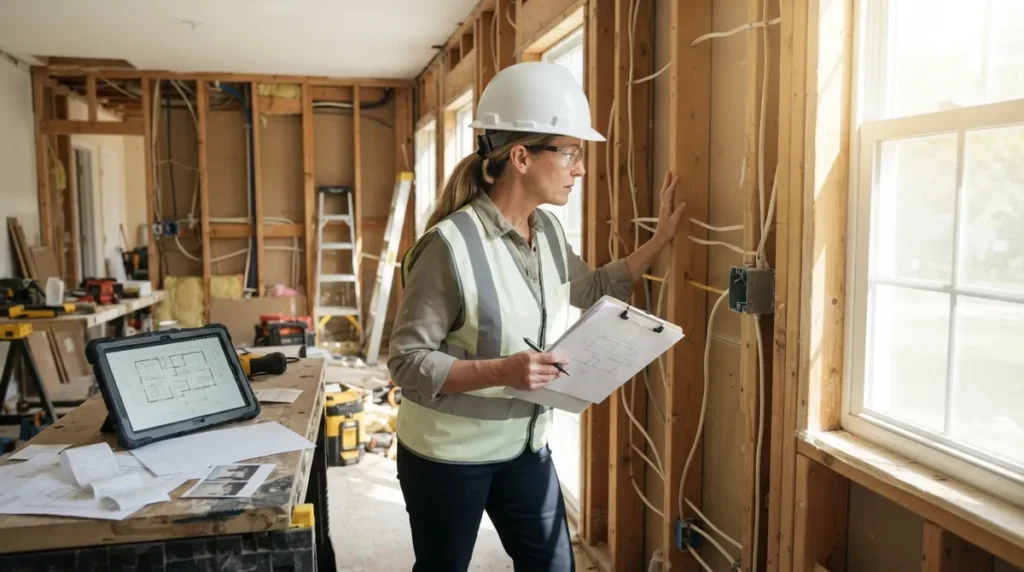
Concealed work like framing or wiring may require walls or ceilings to be opened, so ask the building department early about whether other documentation is acceptable.
-
Non-compliant work can often be fixed with targeted corrections rather than full demolition; gather photos, receipts, and prior permit records before engaging an engineer.
-
An approved and closed-out after-the-fact permit can help with sales and closings, but it does not resolve every code enforcement matter, so start early if a deal has a deadline.
Let's be honest: finding out that a deck, addition, roof, or remodel was built without a permit is a stomach-dropping moment. Maybe you bought the house that way. Maybe a contractor swore he would pull the permit and never did. Maybe a buyer's inspector just flagged something and your closing date is suddenly wobbly. Take a breath. This happens all the time in Florida, and it is very fixable.
That is where after the fact engineering in Florida comes in. It is the informal name for having a Florida-licensed engineer evaluate and document work that was already built without a required permit, so you can support an application with your local building department. It is not a magic stamp, and it is not a separate license category. But done right, it is often the bridge between a problem property and a legal one.
Below are 12 friendly, practical things to know in 2026, whether you are a homeowner, a general contractor, a solar company, a realtor, or a design professional helping a client out of a jam.
1. It Is a Service Description, Not a Special License
"After the fact engineering" is how the industry describes a scope of work. There is no separate statewide engineering license or uniform permit category with that name. It generally means documenting and evaluating construction that was completed without a required permit, then supporting an application to the authority having jurisdiction.
In plain terms, the engineer looks at what exists, checks it against the applicable requirements, and puts findings on paper. The building department then decides what happens next.
2. The Law Behind It Is Florida Statutes 553.79
Florida Statutes §553.79 generally requires a permit before covered construction, alteration, repair, or demolition of a building. The local or state enforcing agency administers permits and inspections. That is why unpermitted work becomes an issue in the first place.
Important point: an engineer's report does not authorize the work and does not guarantee approval. It supports your application. The approval decision belongs to the building official.
3. The Building Department Calls the Shots
This is the single most important thing to remember. The local building department decides what documentation, inspections, and corrective work are required. Forms, fees, and acceptable alternatives vary from one city or county to the next.
Before you spend a dime on a report, confirm which jurisdiction actually controls your address. City lines can be tricky, and the wrong assumption wastes time. Our building department lookup tool and the guide on which Florida jurisdiction reviews my project can point you in the right direction.
4. What an Engineer Actually Does on These Jobs
For structural work, the engineer's scope depends on the project and the local review requirements. Typical tasks include:
- Inspecting accessible conditions on site
- Preparing existing-condition or as-built drawings
- Performing calculations where needed
- Documenting findings in a letter or report
- Specifying repairs or upgrades if something falls short
Signed-and-sealed documents may be requested, but again, the scope is driven by the project and the reviewer. If you want to see how these pieces fit together, take a look at engineering services and as-built drawings.
5. Common Projects That Need It
Some work shows up again and again. The table below gives a quick snapshot of typical projects and what the documentation often involves. Treat it as a general guide, since your jurisdiction sets the real requirements.
| Project Type | Typical Engineering Focus | Other Items That May Be Needed |
|---|---|---|
| Room addition or enclosure | Foundation, framing, wind load path | Survey or site plan, energy documentation |
| Re-roof or roof repair | Decking attachment, truss condition | Product approvals, material documentation |
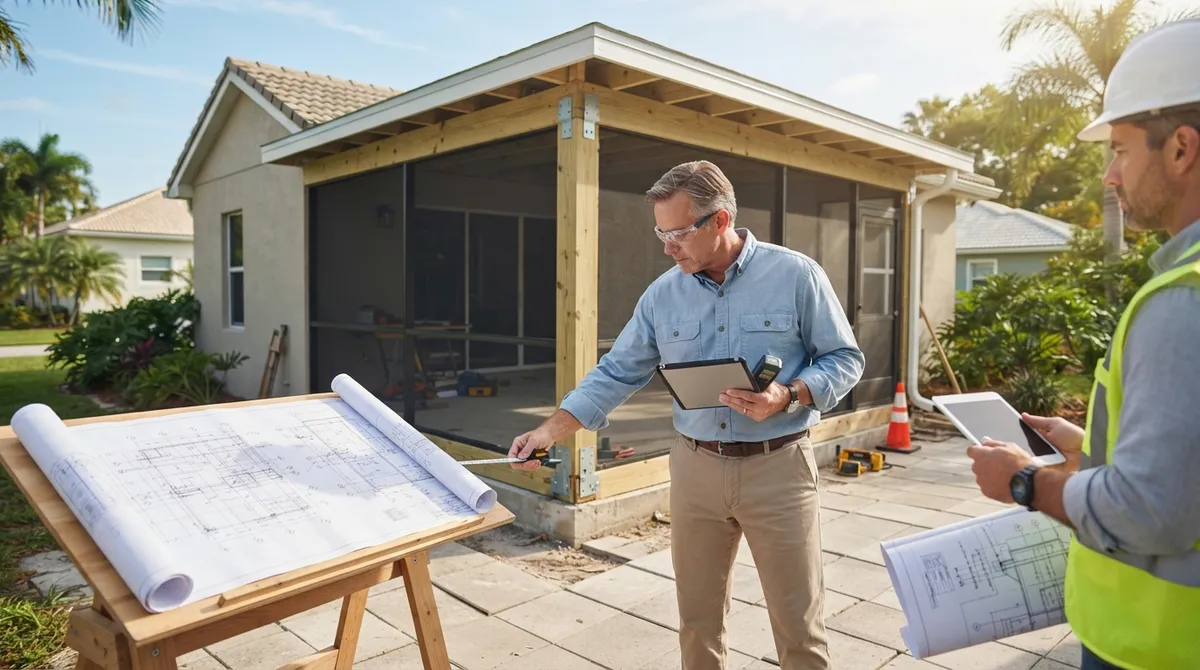
| Screen enclosure or lanai | Anchorage and wind resistance | Site plan, setback verification |
| Garage conversion | Framing changes, egress, structural openings | Electrical and mechanical permits |
| Solar installation | Roof structure and attachment | Electrical documentation, equipment specs |
If your project is a roof, our guide to the unpermitted roof in Florida is a helpful next read.
6. Concealed Work Is the Big Question Mark
Here is a surprise for many owners: a professional cannot reliably verify concealed construction just by looking at the surfaces that hide it. Think framing behind drywall, wiring above a ceiling, or fasteners under roofing.
Because of this, the building official may require walls, ceilings, or finishes to be opened. In some cases, other evidence or professional documentation may be accepted where local procedure allows. Ask early so there are no surprises on inspection day. Our article on when destructive testing is required goes deeper on this.
7. An Engineer Is Only One Piece of the Packet
An after-the-fact application often involves more than a stamped letter. Depending on the jurisdiction and the work, the packet may include:
- Site plans or surveys
- Product or material documentation
- Contractor or owner-builder information
- Separate electrical, plumbing, or mechanical permits and inspections
That is why many owners prefer one team that can coordinate everything. It is far less stressful than juggling five different people. Learn more about permit facilitation and filing and site plans.
8. Work That Does Not Meet Code Can Still Be Addressed
Nobody likes hearing this part, but let's be upfront. If the work does not meet applicable code or other local requirements, the jurisdiction may require corrections, extra inspections or testing, exposure of concealed work, or in some cases removal and reconstruction.
The good news is that many projects only need targeted fixes rather than a tear-down. An engineer can often specify exactly what to strengthen or replace. For a deeper look, read will you really have to demolish unpermitted work.
9. Costs and Timelines Vary Widely
Many owners want a single number, and we wish we could give one. The truth is that no reliable statewide figure exists for average engineering cost, approval rates, or processing time. Everything depends on the jurisdiction and the project.
| Factor | How It Can Affect Cost or Time |
|---|---|
| Jurisdiction | Fees, forms, and review speed differ by city and county |
| Project size and complexity | Larger or more structural work usually means more documentation |
| Concealed work | Opening walls or ceilings adds labor and repair |
| Code gaps | Required corrections add materials, trades, and re-inspection |
| Record quality | Good photos and receipts can reduce guesswork |
For more detail, see our guides on after-the-fact permit cost in Florida and how to estimate after-the-fact engineering costs.
10. Gather Your Documents Before You Start
A little preparation goes a long way. Here is a simple checklist to pull together before talking to an engineer or the building department:
- Property address, parcel number, and any existing permit history
- Photos of the work, ideally from before, during, and after construction
- Receipts, invoices, or contracts that show materials and who did the work
- Any prior plans, surveys, or product information you already have
- Notices from code enforcement, if you received one
You can also check for existing records with the open permit search tool. Our document gathering guide walks through this in more depth.
11. It Helps With Closings, But It Is Not a Cure-All
For real estate professionals and buyers, unpermitted work can derail a sale fast. An after-the-fact permit, once approved and closed out, can help resolve many of those issues. Still, it does not automatically resolve every code enforcement matter or property-sale concern, and the process follows the jurisdiction's own timeline.
If a deal is on the clock, start early and coordinate with your lender and title team. Our realtor closing support and the article on fixing a closing held up by unpermitted work can help you plan.
12. Hire a Team That Can Handle the Whole Journey
The best results usually come from one team that can document the work, draw the plans, file the application, answer reviewer comments, and carry it through closeout. When engineering and drafting live under the same roof, a reviewer comment gets fixed instead of bouncing between outside consultants.
That is exactly how 1 Contractor Solutions works. We are Florida's outsourced permitting department, with in-house drafting and engineering and our own engineer signing and sealing the work. We serve all 67 Florida counties, so whether you are in Hillsborough County, Miami-Dade County, or Orange County, we know the local landscape. Explore our after-the-fact and expired permit services to see how it works.
Who Benefits Most From This Process
Different readers come to this topic from different angles, so here is a quick look at how it applies to each.
- Homeowners: Legalize an addition, roof, or remodel so you can sell, refinance, or insure with confidence.
- General contractors: Clean up a project a prior contractor left open and protect your license and reputation.
- Solar companies: Document structural and electrical details when an install needs to be brought into compliance.
- Realtors and investors: Clear permit issues that appear during inspections or closing.
- Architects, designers, and trades: Outsource drafting, engineering, and permit administration without adding headcount.
Your Simple Game Plan
If you are ready to move, here is a friendly roadmap to follow:
- Confirm the jurisdiction that controls your property.
- Ask the building department how it handles after-the-fact applications.
- Gather photos, receipts, and any prior records.
- Have a Florida-licensed engineer evaluate the work and document findings.
- Prepare plans, file the application, and respond to reviewer comments.
- Complete any required inspections, corrections, and closeout.
For a full walkthrough, our guide on how to get an after-the-fact permit in Florida and the unpermitted work legalization guide are great companions to this article.
Final Thoughts
Unpermitted work feels like a big, scary problem, but it usually has a clear path forward. Understand who makes the decisions, document the work properly, and bring in people who do this every day. You do not have to figure it out alone.
You can also follow us on LinkedIn and follow us on Facebook for more Florida permitting tips, and see what our clients say when you visit us on Google — 1 Contractor Solutions. Need help right now? Read about our urgent permit rescue service.
Ready to turn a permit headache into a finished file? Reach out today and get a free quote from a team that responds fast and handles it from start to finish.
FAQs
What does after the fact engineering mean in Florida?
It is the informal name for a Florida-licensed engineer evaluating and documenting work that was built without a required permit. The report supports your application, but the local building department decides whether the work can be approved.
Do I need a Florida-licensed engineer for an after-the-fact permit?
Not always, since requirements depend on your project and your jurisdiction. For structural work, though, many building departments ask for signed-and-sealed documentation, so it is smart to confirm with your local office before you start.
Will I have to open walls or ceilings for an after-the-fact inspection?
Possibly. Concealed work cannot be reliably verified from the outside, so the building official may require finishes to be opened or may accept other documentation where local procedure allows. Ask your building department early so you can plan for it.
Can unpermitted work be approved if it does not meet current code?
It can sometimes be approved after corrections. The jurisdiction may require repairs, extra inspections or testing, or exposure of concealed work, and in some cases removal and reconstruction. An engineer can often pinpoint the targeted fixes needed.
How much does an after-the-fact permit or engineering report cost in Florida?
There is no reliable statewide figure, because costs depend on your jurisdiction, project size, concealed conditions, and any required corrections. The best move is to confirm local fees with your building department and request a scoped quote for the engineering.
We do this work every day across all 67 Florida counties. Call (866) 314-6931 and we will tell you what your situation actually requires — including when you do not need us.
Related services
Permit Facilitation & Filing
You have a crew scheduled, a client asking for dates, and a permit sitting somewhere in a queue you cannot see. We file it, w…
See the servicePlan Review Coordination
A permit in plan review is not one queue. On a commercial project it can be six queues, each with its own reviewer, its own c…
See the serviceReady to get your permit moving?
One call tells you which jurisdiction controls your project, what it will take, and what it will cost. Most of the time we can scope it on the phone.